Uncle Toby’s bowling-green fortifications
The Life and Opinions of Tristram Shandy, GentlemanUncle Toby’s bowling-green fortifications are a miniature military landscape where campaigns can be reconstructed in a domestic garden and companionship can take the form of shared labor. When the stipulated end of the real fortifications they have been imitating makes their own works seem obsolete, the scene reveals that the project has become more than a hobby: it gives Uncle Toby and Corporal Trim a common service and a humane way of thinking about war.
Design and Setting
Uncle Toby’s military works occupy the bowling-green, where the ground is treated as terrain to be fortified and besieged. The garden’s small-scale defenses echo actual fortifications closely enough to support the pair’s military practice: the account refers to a glacis, and Trim tends the earth with a spade as though preparing or leveling a military position. A wheelbarrow, pickax, pioneer’s shovel, and pickets belong to the works’ practical equipment, making the model a place of continuing construction rather than a static display.
The fortifications also sit beside the domestic world of the house. In another episode, the alignment of Uncle Toby’s house and garden with Widow Wadman’s property, together with a thickset arbour and a wicker gate made through the hedge, gives her opportunities to watch the military activity and approach his sentry-box. The garden’s defenses thus serve both as a model battlefield and as part of the setting for courtship: military boundaries and passages become routes for social approaches.
The End of the Works
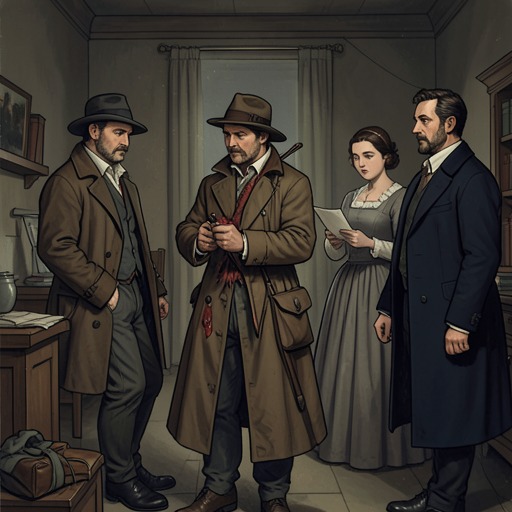
The works face a decisive interruption when Uncle Toby and Trim discuss the stipulated destruction of the fortifications they have been following. Trim reports that the fortifications are destroyed and the basin is level with the mole. Uncle Toby agrees with a half-suppressed sigh and asks him to come into the parlor for the stipulation, which has been lying on the table for six weeks. Trim adds that the old woman used it to kindle the fire that very morning: the document that authorizes or records the change has itself been consumed in a domestic act.
Uncle Toby concludes that there is no further occasion for their services. Trim casts his spade into the wheelbarrow and turns away to gather the remaining military stores, including his pickax, pioneer’s shovel, and pickets. The prospect of dismantling the miniature works makes their tools suddenly look like equipment to be removed rather than instruments for another exercise. A sigh from the sentry-box stops him; its thin slit deal walls return the sound to him with added sorrow.
Trim then finds a way to postpone the ending. He takes his spade back out of the wheelbarrow, puts a little earth in it, and pretends to level something at the foot of the glacis. In fact, he loosens and trims a couple of sods, gives them a few light blows with the back of the spade, and sits down near Uncle Toby’s feet to divert him. The small maintenance gesture keeps the two men beside the works and gives Trim a moment in which to console his master rather than carry the military stores away.
Fellowship and Purpose
The meaning of the fortifications reaches beyond imitation warfare. Uncle Toby answers Trim’s suggestion that he loves glory more than pleasure by saying that he hopes he loves mankind more than either. He explains that knowledge of arms can serve the good and quiet of the world, and that the military branch they have practiced together on the bowling-green has the object of checking ambition and protecting the lives and fortunes of the few from the plundering of the many.
This account gives the miniature works a moral purpose without erasing their comic, domestic scale. The garden’s modeled defenses are not presented as a campaign in themselves; they are a form of shared practice that binds master and corporal while expressing Uncle Toby’s preference for protection over conquest. When the drum of war calls, he trusts that neither man will lack enough humanity and fellow-feeling to turn about and march. The fortifications therefore stand at once for military absorption, loyal companionship, and a conception of arms directed toward preserving others rather than pursuing glory.